THE ORIGINS OF GUCCI:
Before talking about "porn chic", I would like to give just a little bit information about one of my favorite houses.
The Italian house was founded in 1921 by Guccio Gucci. His family was specialized in leatherwork and that was what created the fame of Gucci. Soon after, the brand started producing monogrammed handbags with its iconic green and red bands, followed by loafers. Gucci, renowned for his unwavering resolve, confronted the obstacle of the League of Nations embargo against Italy in the years 1935-1936. Instead of succumbing to the challenge, he embarked on a quest for inventive solutions, exploring alternative materials.
During this period, he skillfully crafted a unique woven hemp sourced from Naples, adorned with the inaugural signature motif: an array of interconnected petite diamonds in a rich dark brown hue contrasted against a warm tan background. This breakthrough marked the successful introduction of the brand's inaugural line of suitcases.
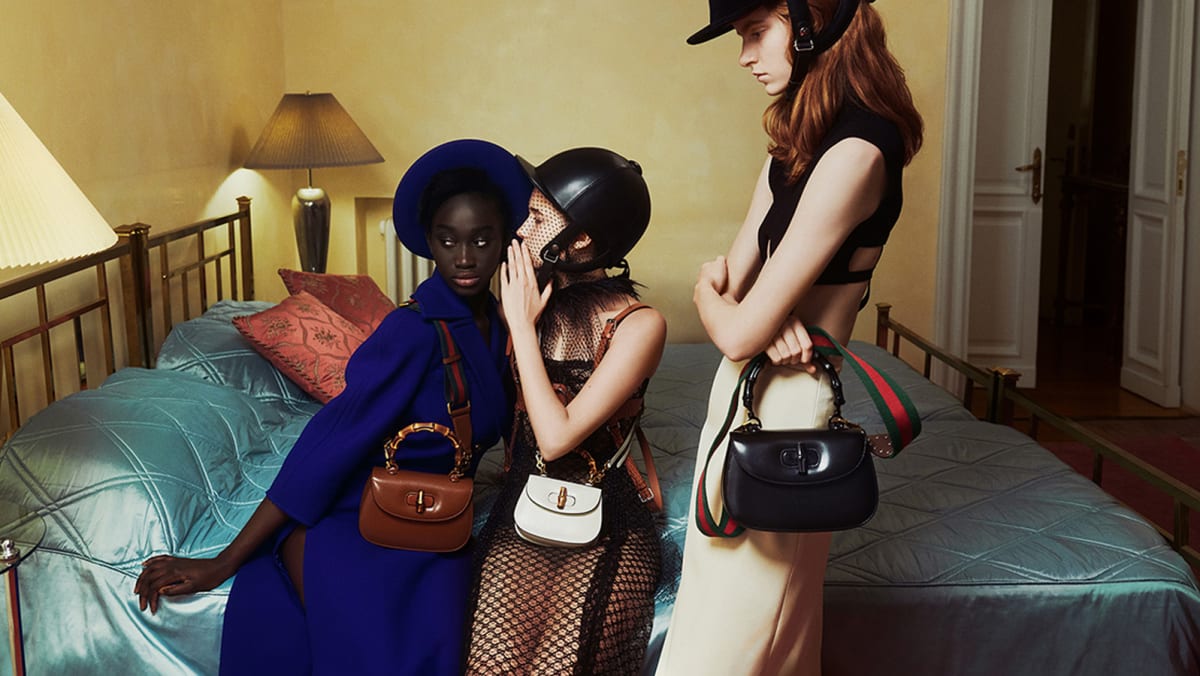
Following World War II, the production of leather goods was reinstated, and Gucci's song, Aldo introduced pigskin as a prominent and easily recognizable material for the brand. It was in this era that the renowned bamboo-handled bag, inspired by the contours of a saddle, made its debut.
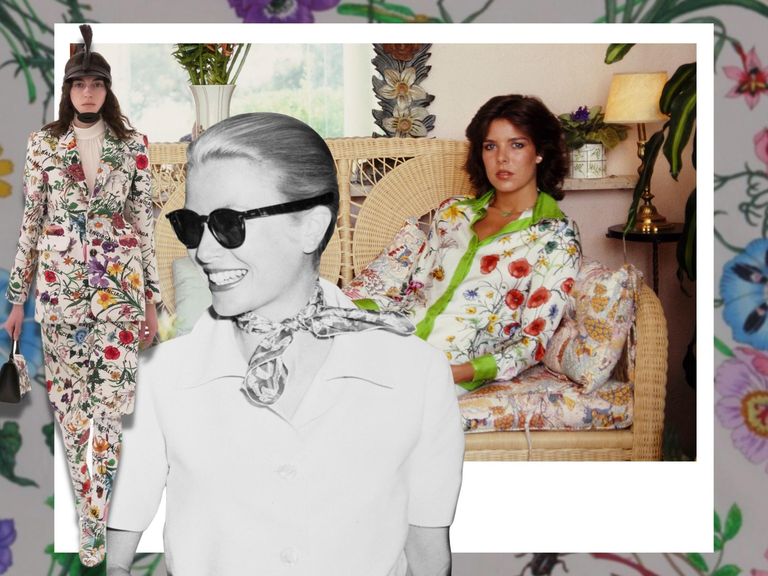
In the 60's, Gucci was a serious competitor in the luxury sector. The company built her reputation thanks to the quality of the products and also thanks its timeless pieces worn by icons of fashion. For instance, the Flora scarf print was designed for Princess Grace Kelly of Monaco. The pattern has become iconic for Gucci, revisited by creative directors Frida Giannini and by Alessandro Michele.
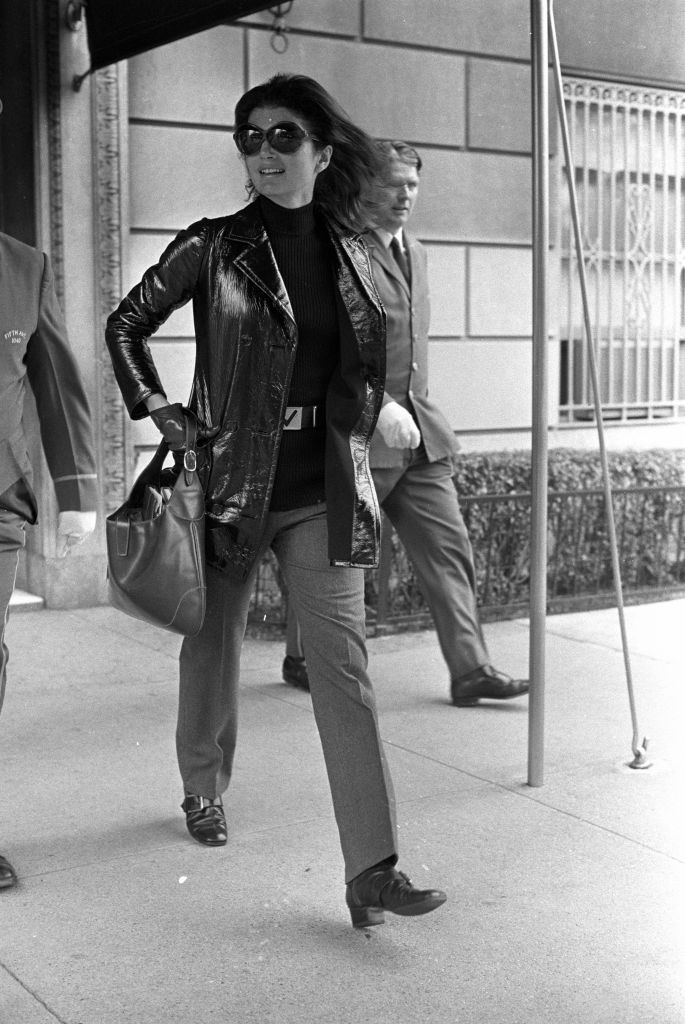
Furthermore, there is the Jackie bag which was originally named Constance but due to the fact that the fashion icon Jackie Kennedy wore it all the time, the company changed its name in honor to the former First Lady. She was rarely photographed without her bag and participated in the popularization of it. The Jackie barely changed since 1961 and it is now a timeless piece.
Throughout the 1980s, the brand saw high revenues and a major influx of counterfeit goods in the market – usually an indication of a luxury brand’s success. However, the company suffered a dip in popularity during the 1990s due to a lack of product innovation so the company could not have a competitive advantage, dismissal by fashion industry folk, and then the murder of CEO Maurizio Gucci by his wife.
TOM FORD, THE FATHER OF PORN CHIC:
In the 90's, Gucci had to deal with the murder of Mauricio Gucci, moreover the Italian house was considered old-fashioned and on the verge of bankruptcy. At the time, Gucci was facing a decline in sales and popularity due to internal disputes, financial struggles, and a lack of innovative designs. The house needed a bowl of fresh air and thanks to Tom Ford, they've managed to get back on track. In 1994, Ford was promoted to Creative Director, a position he held until 2004.
During this decade, he revitalized Gucci, turning it into one of the most sought-after luxury brands in the world. Tom Ford teamed up with the photographer Mario Testino and stylist Carine Roitfeld, to direct Gucci's advertising campaigns, they created the Gucci myth. The strategy of Tom Ford was to rebrand Gucci with a strong marketing. He controlled everything from the design of the products to the architecture of the boutiques, ... The goal was to attract customers by breaking the image of Gucci and build a new one. In the mid-1990s, he transformed the Gucci brand, judged to be aging, by starring so-called "porno chic" imagery: provocative, sexy and luxurious.
The motto of the brand was "to sell sex" and they did it. Ford said "90% of my pleasure in life comes from the visual" and the adds became the strength of Gucci. Gucci's clothing pieces were promoted using models in sexual poses, as part of provocative advertising campaigns. Collaborating with photographers such as Mario Testino and Steven Meisel yielded images exuding sex appeal, generating both controversy and glamour.


These campaigns not only grabbed the public's attention but also reshaped Gucci's identity as a trailblazing luxury brand. Tom Ford deliberately courted controversy and used shock value to promote the brand's transformation, a strategic gamble that paid off. Gucci cemented its reputation as a pioneering force in the competitive fashion industry throughout the 1990s and 2000s.
You might be wondering if this approach remains effective in today's context, and the brief answer is that it certainly does. Present-day social media heavily relies on the use of shock value to attract engagement, particularly within the crowded fashion industry. Gucci effectively employed this strategy at the right moment, and its success can be attributed to a combination of the growing obsession with celebrities in popular culture, along with a unique cultural resurgence best described as the 'return of sexy' in fashion.
Tom Ford's impact on Gucci began with a well-defined aesthetic vision that accentuated sensuality and boldness. His designs embodied the spirit of the 1990s, a decade characterized by an exploration of sexuality and individuality. Tom Ford not only transformed the brand's clothing line to feature glamorous and contemporary pieces but also revitalized Gucci's classic motifs.
He introduced innovative designs that pushed the boundaries of fashion, such as the iconic velvet hip-huggers, satin shirts, and skin-tight leather pants. On the runways, we could see models wearing unbuttoned satin shirts and low-waisted velvet trousers and vibrant colours to create an unprecedented sex appeal that is both fresh and unsettling.
Furthermore, some pieces had holes through which you can see a piece of gold jewellery, it would be an elegant and sexy way to accessorize your body. Thongs were also a must-have even for the men. The dresses and tops would have butt cleavages: Not at all practical, this is uncharted territory. A fashion mutiny to great effect.

THE IMPACT OF TOM FORD:
Thanks to Tom Ford, he gave birth to a new Gucci.
In financial terms, Gucci succeeded to increase its annual revenues by making 3$ billion while the house was struggling and making only 280$ millions. The substantial boost in revenue clearly demonstrated the allure of Ford's designs and his skill in foreseeing and addressing consumer preferences. His unique style and daring marketing initiatives captivated the luxury consumer base, fueling their desire for Gucci products. Guided by Ford's leadership, Gucci's stock price underwent a remarkable surge. Between 1995 and 2000, the company's shares surged by over 1,000%, underscoring the market's faith in Gucci's reinvigorated creative and financial strengths. This remarkable appreciation in stock value served as a clear indicator of the brand's revival and Ford's capacity to reshape the company's fortunes. When Ford took the helm at Gucci, the company's market value was in a precarious position. Yet, when he departed in 2004, the market value had soared to approximately $10 billion. This remarkable expansion firmly established Gucci as one of the foremost global luxury brands and underscored the immense influence of Ford's leadership on the company's overall financial well-being.
Tom Ford had a huge impact in the fashion industry, his creative vision reshaped it and influenced many designers. Ford's daring and sensuous designs challenged the conventional norms of fashion, establishing sex appeal as a defining element in the realm of luxury. This provocative approach not only distinguished Gucci from its rivals but also inspired other brands to adopt sensuality and audacious designs in their own collections. Ford's impact is evident in the work of subsequent designers who have likewise delved into themes of sensuality and provocation in their creations. Ford was the celebrity of designers. Prior to Tom Ford, the concept of a designer emerging as a distinct brand entity was relatively uncommon. Ford's triumph at Gucci elevated him to a celebrity status, highlighting the opportunity for designers to utilize their personal brand and star appeal to enhance the brands they were affiliated with. This transformation paved the way for other designers such as Marc Jacobs, Alexander Wang, and Olivier Rousteing to establish themselves as influential figures not only within the fashion industry but also in broader spheres.
Under Tom Ford's leadership, Gucci became inextricably linked with celebrity style, playing a significant role in shaping the fashion landscape of the 1990s. One of the most iconic connections of that era was with none other than Madonna, the Queen of Pop herself. Madonna wholeheartedly embraced Tom Ford's Gucci, regularly making public appearances and performing in his creations. Witnessing Madonna, one of the most influential figures in the music industry, don Ford's designs was a potent endorsement of the Gucci brand. This alliance between high-profile personalities and Gucci not only heightened the brand's visibility but also fortified its reputation as the embodiment of contemporary luxury and cutting-edge style.
TOP 7 OF MY FAVORITE RED CARPET LOOKS OF GUCCI BY TOM FORD:
1. Salma Hayek at a charity benefit in 1997
2. Nicole Kidman at the Met Gala in 2003
3. Madonna, at the VMAS in 1995
4. Naomi Watts at the Oscars in 2002
5. Halle Berry, at the Gothika premiere in 2003
6. Gwyneth Paltrow, at the VMAS in 1996
7. Eve, at the Met Gala in 2003
Thanks for reading my article <3
By Aya L.

:max_bytes(150000):strip_icc()/gucci-history-3-2000-5ed8deff472345128a31def74695ff7a.jpg)


Comments
Post a Comment